

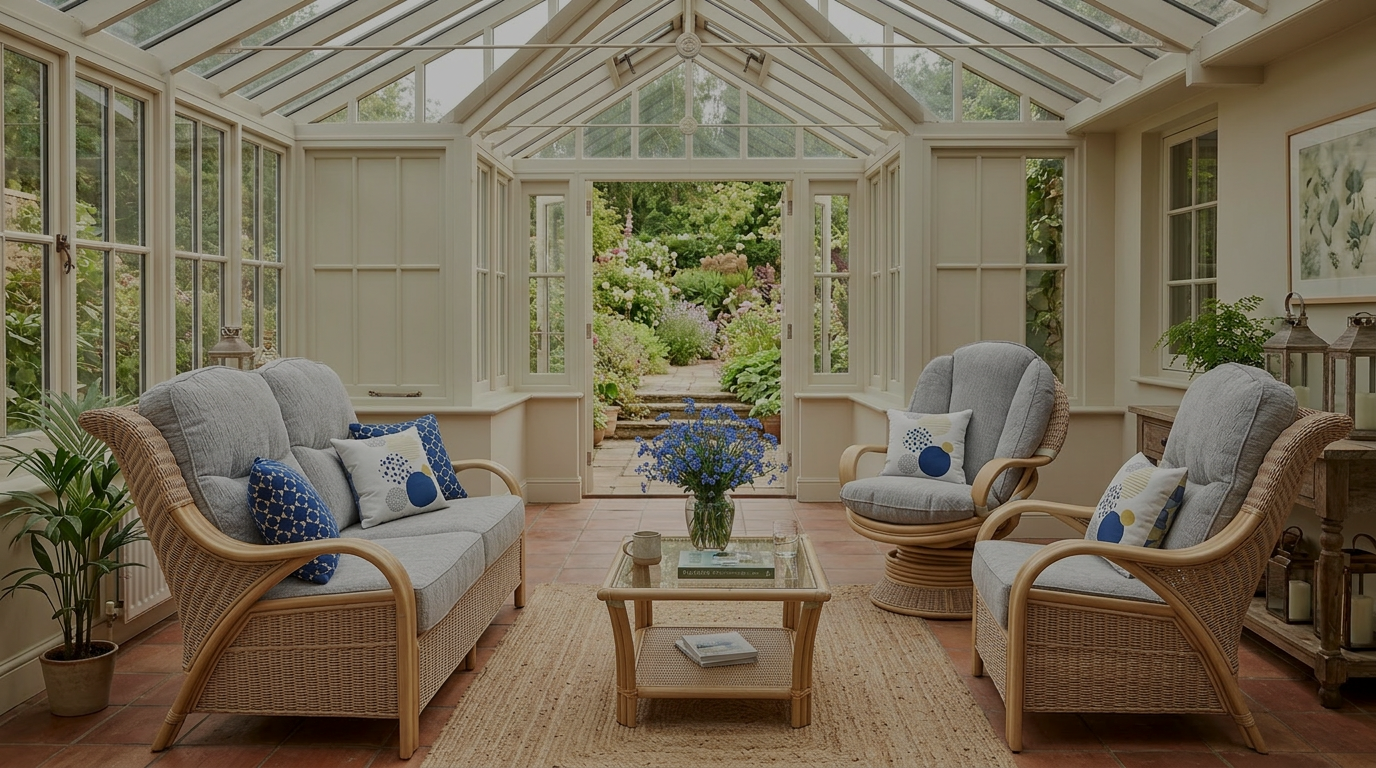
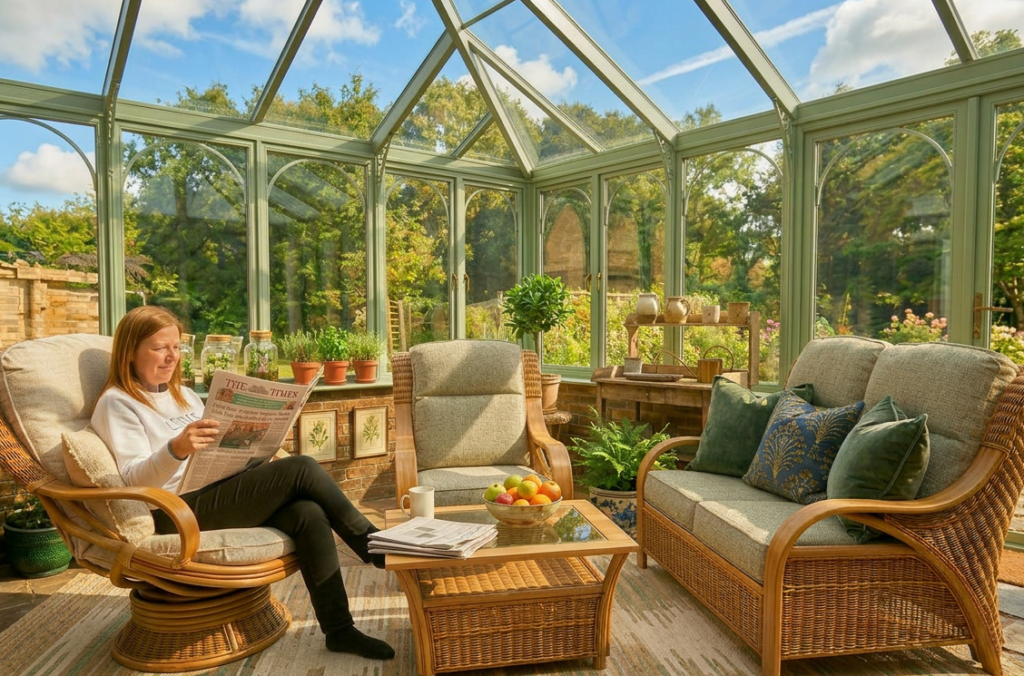
A dining space with a view. Few things beat eating with the garden as your backdrop. A round table keeps a smaller conservatory feeling open and makes conversation easy; a longer table earns its place if you entertain. Cushioned dining chairs make lingering over a second cup of tea far more tempting, and a little soft lighting turns an everyday meal into something that feels like an occasion.
A reading nook. You don’t need a whole room, just a corner. A high-backed cane armchair, a side table for your cup and your book, a warm lamp for when the sun dips, and a rug underfoot to soften the space. It’s the kind of quiet sanctuary a conservatory does better than anywhere else in the house.
A light-filled home office. All that natural light is wasted on a spare room, so put a desk in it instead. A compact desk and a comfortable chair that doesn’t fight the rest of your décor will do it. Add a little woven storage to keep clutter at bay, and a plant on the sill, and working from home suddenly feels a lot less like work.
A plant-lover’s oasis. Lean into the greenhouse energy. Cluster pots and trailing plants around woven seating, add a pedestal or shelf for height, and let the room blur the line between conservatory and garden entirely. The neutral tones of cane and rattan make the perfect backdrop for all that green.
Furniture ideas for small conservatories
A snug conservatory is a styling opportunity, not a limitation. The trick is choosing pieces that work hard without crowding the floor.
A two-seater bistro set is often all a compact room needs. It gives you somewhere to sit, eat and enjoy the view without swallowing the space. Look for furniture with slim, open frames rather than bulky bases, so light can travel through and the room breathes. Pieces that double up earn their keep, too: a stool that’s also a side table, or nesting tables you can tuck away. And keep the palette calm and consistent, because too many competing tones make a small room feel busier than it is.
Styling touches that pull the room together
Furniture sets the scene; the finishing touches give it character.
Cushions and throws are the fastest way to change the mood of a conservatory. Switch to brighter prints in summer and warmer, heavier textures as the nights draw in, and the same furniture feels seasonal all year.
Lighting matters more than people expect. Natural light handles the daytime, but a conservatory after dark needs a plan: a floor lamp for the reading corner, lanterns or battery lights for soft evening glow, perhaps a pendant over the dining table. Layered lighting is what keeps the room usable once the sun’s gone.
Plants belong here almost by definition. Low-maintenance choices like peace lilies, ferns or a trailing ivy add life and colour with very little fuss, and they sit beautifully against woven furniture.
A rug grounds the seating, softens hard conservatory flooring and quietly defines a zone, which is useful if your room is doing two jobs at once, like lounging and dining.
Keeping cane furniture looking its best
Cane and rattan reward a little easy care, and a conservatory is the one room where it’s worth knowing the basics.
Strong, direct sun over many months can gradually lighten any natural material, so it’s worth positioning favourite pieces slightly out of the harshest glare, or using light-filtering blinds, which also make the room more comfortable to sit in. A quick regular dust with a soft brush keeps the weave clean, and an occasional gentle wipe is usually all that’s needed. If your conservatory holds a lot of warmth, all-weather rattan is the more forgiving option. Treated kindly, good cane furniture stays handsome for years.
Come and see it for yourself
Photographs only get you so far. A conservatory is a room you feel, and so is the furniture that goes in it. At the Cane Furniture Studio showroom you can sit in the lounge sets, test the dining chairs, see how the weaves and tones look in real light, and talk it through with the team. We’re always happy to help you picture how a piece will work in your own space.
Browse the conservatory furniture ideas above, save the ones that feel like you, and come and find the real thing in store.
Conservatory furniture FAQs
What furniture is best for a conservatory? Cane and rattan are popular choices because they’re light, airy and naturally suit a bright, garden-adjacent room. Beyond the material, pick furniture that matches how you’ll use the space: a lounge set for relaxing, a dining set for entertaining, or compact pieces for a smaller room.
Is cane furniture suitable for a conservatory? Yes. Cane furniture is a classic fit for sheltered, indoor-style conservatories, bringing natural warmth and texture to the room. If your conservatory gets very hot or you want pieces that can move outside too, all-weather (synthetic) rattan is the hardier alternative.
How do I stop conservatory furniture from fading? Keep pieces out of the most direct, sustained sunlight where you can, and consider light-filtering blinds, which protect your furniture and make the room more comfortable. All-weather rattan and removable, washable cushion covers also help your setup stay looking fresh.
What’s the difference between cane, rattan and wicker? Rattan is the natural material, a climbing palm. Cane is the outer skin of that palm, woven over a frame. Wicker isn’t a material at all; it’s the weaving technique used to make the furniture. In practice the terms often overlap.
How do I furnish a small conservatory? Choose slim, open-framed pieces that let light through, such as a two-seater bistro set, and look for furniture that doubles up, like a stool that works as a side table. Keep the colour palette calm and consistent to make the room feel larger and more relaxed.

